Huawei’s entry into the electric vehicle powertrain space has shifted the global EV industry’s focus to modular, software-integrated solutions that balance efficiency, cost, and real-world usability. For years, automakers either built their entire powertrain systems in-house or relied on legacy suppliers like Bosch and Continental, but Huawei’s DriveONE line has introduced a new model: a scalable, high-performance powertrain that lets brands focus on design and user experience without investing millions in hardware R&D.
Core Components of Huawei’s EV Powertrain
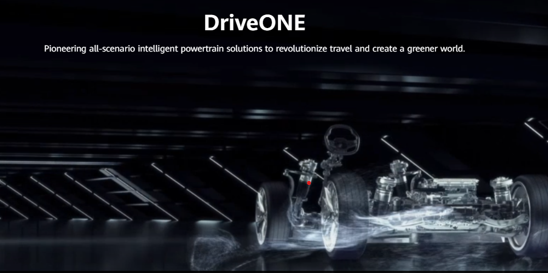
At the heart of Huawei’s powertrain is the DriveONE modular platform, which combines four key elements: the electric motor, silicon carbide (SiC) inverter, coaxial gearbox, and HarmonyOS-powered control unit. Unlike many suppliers that offer separate parts, DriveONE is designed as a unified system, so each component works in sync rather than as disconnected add-ons. The motor line-up includes two main variants: a 150kW permanent magnet synchronous motor (PMSM) for compact EVs and entry-level models, and a 350kW dual-motor setup for mid-size and full-size vehicles. The dual-motor version delivers 700Nm of combined torque, enough to pull off quick overtakes on highways while maintaining low energy waste.
The SiC inverter is the most transformative part of the system. Traditional silicon-based inverters lose up to 10% of electrical energy as heat during power conversion, but Huawei’s SiC design cuts that loss to less than 3%. This efficiency gain translates directly to longer range: for a 60kWh battery, that’s an extra 30km of CLTC range compared to a silicon inverter-equipped vehicle. The coaxial gearbox integrates the motor, reducer, and differential into a single compact unit, reducing the powertrain’s total weight by 15% and freeing up space for larger battery packs or more interior room. What sets Huawei apart from competitors is its software layer: the HarmonyOS powertrain control module doesn’t just execute basic torque commands—it learns the driver’s habits over time. If you regularly take highway trips, it will prioritize high-speed efficiency; if you drive mostly in the city, it will adjust torque for snappy acceleration at stoplights. It also syncs with the vehicle’s adaptive cruise control, so torque changes seamlessly when the car ahead slows down, eliminating jerky movements that waste energy.
See also: Keeping Paths, Entrances and Paved Areas Safe Throughout the Year
Key Technological Advantages That Stand Out
One of the most noticeable benefits of Huawei’s powertrain is its performance in real-world conditions, especially in extreme weather. For example, in northern China, where winter temperatures often drop below -10°C, many EVs lose 30% or more of their range due to inefficient powertrain operation and battery heating. A 2023 survey of AITO M7 owners (which uses Huawei’s dual-motor setup) found that their range only dropped by 14% in those conditions—half the loss of competing models like the Tesla Model Y Long Range. This is thanks to Huawei’s intelligent thermal management system, which regulates the temperature of both the motor and battery within milliseconds. The system keeps the motor’s windings and magnets at an optimal 80°C even in freezing weather, so it doesn’t waste power warming up unnecessary parts.
Another big advantage is modularity, which cuts development time and costs for partner automakers. Before partnering with Huawei, Seres (AITO’s parent company) had to invest $200 million over three years to develop its own powertrain, which would have delayed the AITO M5’s launch by two years. By using DriveONE components, Seres launched the M5 in just 18 months and reduced its powertrain development costs by 25%. Modularity also lets brands customize the system: a luxury brand can add premium noise insulation to the dual-motor setup for a quieter ride, while a budget brand can use the single-motor variant to keep prices low. This flexibility has made Huawei’s powertrain attractive to both new EV brands and established automakers looking to expand their electric lineups without overinvesting.
Real-World Deployments and Industry Impact
As of mid-2024, Huawei’s powertrain has been installed in over 210,000 vehicles in China, mostly through partnerships with domestic automakers. The most successful collaboration is with AITO, which sold 142,000 units in 2023—nearly all equipped with DriveONE. The AITO M7, a mid-size SUV with a range-extender engine, combines Huawei’s powertrain with a 1.5-liter gasoline generator, giving it a CLTC range of 1,220km. A survey of M7 owners found that 89% cited smooth acceleration and reliable range as their top reasons for buying the vehicle; many noted that in winter, they only need to charge the battery once every 5 days for daily commutes.
The Luxeed S7, a premium sedan launched in 2023 with Chery, uses Huawei’s 800V high-voltage powertrain platform, which charges 200km of range in 5 minutes. A Shanghai-based user who commutes 80km each way says he charges his S7 once every three days, and when he does, he can top up enough for a full week of commuting in the time it takes to get a coffee at a charging station. Beyond passenger cars, Huawei supplies powertrain components to other brands: BAIC’s Arcfox uses its SiC inverters in the Alpha S, which improved the model’s efficiency by 12% compared to older Arcfox EVs. Huawei’s entry has also pushed the entire industry to adopt SiC tech: BYD and Tesla now offer SiC inverters in their top models, partly to compete with DriveONE’s efficiency.
Future Roadmap and Current Challenges
Huawei has outlined an ambitious roadmap for its powertrain, with updates planned through 2028. By 2026, it will launch a 1000V high-voltage platform that cuts charging time to 5 minutes for 200km of range—making fast charging almost as convenient as refueling a gas car. It’s also integrating its powertrain with solid-state batteries, which are expected to hit the market in 2027; pairing them with DriveONE could lead to EVs with ranges over 1,000km on a single charge, without the extra weight of large battery packs. Huawei is also expanding into heavy-duty commercial vehicles, partnering with FAW to develop a 500kW powertrain for electric semi-trucks, a segment that’s growing 30% annually in China.
But Huawei faces significant challenges. The first is supply chain vulnerability: its SiC chips are mostly sourced from TSMC, and geopolitical tensions between China and the U.S. threaten access. To fix this, Huawei is investing in domestic chip packaging facilities in Shenzhen and partnering with SMIC to develop local SiC production, aiming to source 70% of its chips from China by 2025. Competition is another hurdle: BYD’s Seal sedan has similar specs to the Luxeed S7 but is 10% cheaper, while Tesla’s powertrain is highly optimized for performance and cost. Brand perception is also an issue: some consumers still prefer in-house powertrains, viewing third-party tech as less reliable. Huawei is addressing this by co-developing systems with partners, so the powertrain syncs fully with the vehicle’s infotainment and driver assistance systems—for example, in the Luxeed S7, the powertrain shares data with HarmonyOS to suggest energy-efficient routes based on traffic and weather. Finally, global expansion: Huawei plans to launch its powertrain in Germany and France by 2026, but it will need to meet strict European safety standards and adapt to local consumer preferences, like higher focus on ride comfort and noise reduction. These challenges will shape Huawei’s powertrain’s growth, but its track record of innovation suggests it will continue to redefine what EVs can do for drivers around the world.