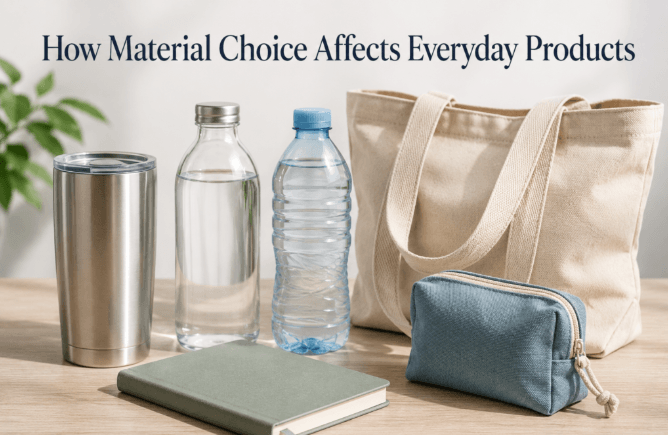
Materials shape the way everyday products feel, perform, and last. People often notice color, size, or style first, but the material usually has a bigger impact on daily use. It affects weight, durability, cleaning, comfort, cost, and how suitable the item is for different settings.
This is true for many common products. A thin fabric bag may be easy to fold but may not carry heavy items well. A soft-cover notebook may feel lightweight but may not protect pages inside a crowded bag. A lunch container may look neat at first, but if the material stains easily or holds odors, people may stop using it after a short time.
Materials Affect Daily Performance
Material choice matters most when a product is handled every day. These items are picked up, washed, packed, moved, dropped, stored, and reused. If the material does not match the product’s purpose, even a good-looking item can become inconvenient.
Weight is one of the first things people notice. A product can be strong but too heavy for travel, school events, or outdoor activities. At the same time, an item can be lightweight but too weak for repeated daily use. The right balance depends on who will use the product and how often it will be carried.
Texture and finish also affect the experience. A matte surface may feel modern and easier to grip. A glossy surface may look bright but show fingerprints more clearly. A textured surface may improve handling but require more careful cleaning. These small details influence whether people enjoy using the item over time.
Cost is part of the decision, but it should not be the only factor. A low-cost material can be suitable for short-term events or large-volume distribution, while a more durable material may be better for employee kits, client gifts, or products meant for long-term use.
Drinkware Materials and Everyday Use
Drinkware is a useful example because different materials create very different experiences. Plastic drinkware is usually light and easy to carry. Glass can look clean and stylish, but it may not be ideal for travel or outdoor use. Stainless steel is often chosen when durability, insulation, and repeated daily use matter.
For organizations or buyers who want a sturdy reusable option, custom stainless steel tumblers can be a practical choice for work, travel, gifts, and daily routines. They can feel more durable than many lighter options while still offering enough design flexibility for branding.
Temperature performance is another reason material matters. Some materials transfer heat quickly, while others help slow temperature changes. This can affect how comfortable the item feels in the hand and how suitable it is for coffee, tea, cold water, or iced drinks.
Before choosing drinkware for a group, it helps to compare different types of water bottles. Bottle and tumbler styles can vary by material, lid design, size, insulation, portability, and cleaning requirements. Understanding those differences can prevent a product from being chosen only because it looks good.
See also: Business Risks That Often Go Unnoticed Until a System Fails
Match the Material to the Purpose
The best material depends on the situation. A school event may need something lightweight and easy to distribute. A corporate gift may need something that feels durable and professional. A travel item may need to resist dents, spills, or rough handling. A home product may focus more on comfort and appearance.
Cleaning should also be considered. Some materials are easier to rinse and dry, while others require gentler care. Products with lids, seals, straws, or textured surfaces may need extra attention. If a product is difficult to clean, people may use it less, even if the material itself is strong.
For branded products, material affects perception. A flimsy product may make the brand feel less thoughtful. A sturdy, useful product can create a stronger impression. People often judge quality through touch, weight, and performance before they think about the design printed on the surface.
Final Thoughts
Everyday products succeed when they fit real habits. Style may attract attention at first, but material affects whether the product remains useful over time. Choosing the right material is one of the simplest ways to make a product feel better, last longer, and serve people more effectively.
A good product does not need the most expensive material. It needs the material that matches its purpose. When material, design, and use case work together, everyday items become easier to trust and more likely to stay in use.